New Data: 81% of Physicians Use AI
AI is becoming a regular part of physician work in the U.S.
Doctors are using it to search medical literature, create documentation, summarize patient information, draft messages, and support other parts of their daily work.
Below, we break down the latest data on how many physicians use AI in 2026, how they are using it, what impact it is having on their work, and what concerns remain.
Physician AI Use: Key Stats
- 81% of physicians use AI professionally.
- Physician AI use has increased from 38% in 2023.
- Physicians now report an average of 2.3 AI use cases, up from 1.1 in 2023.
- 39% use AI to summarize medical research or standards of care.
- 29% of physicians in Doximity’s latest survey group use voice-based documentation tools such as ambient AI scribes.
- Ambient AI reduced documentation time by 1.6 minutes per note in one 2026 emergency medicine study.
- 71% of physicians surveyed by Doximity cited accuracy and reliability as an AI concern.
- 92% of physicians surveyed by the AMA want more AI education and training.
What Percentage of Physicians Use AI?
81% of physicians use AI professionally (AMA)
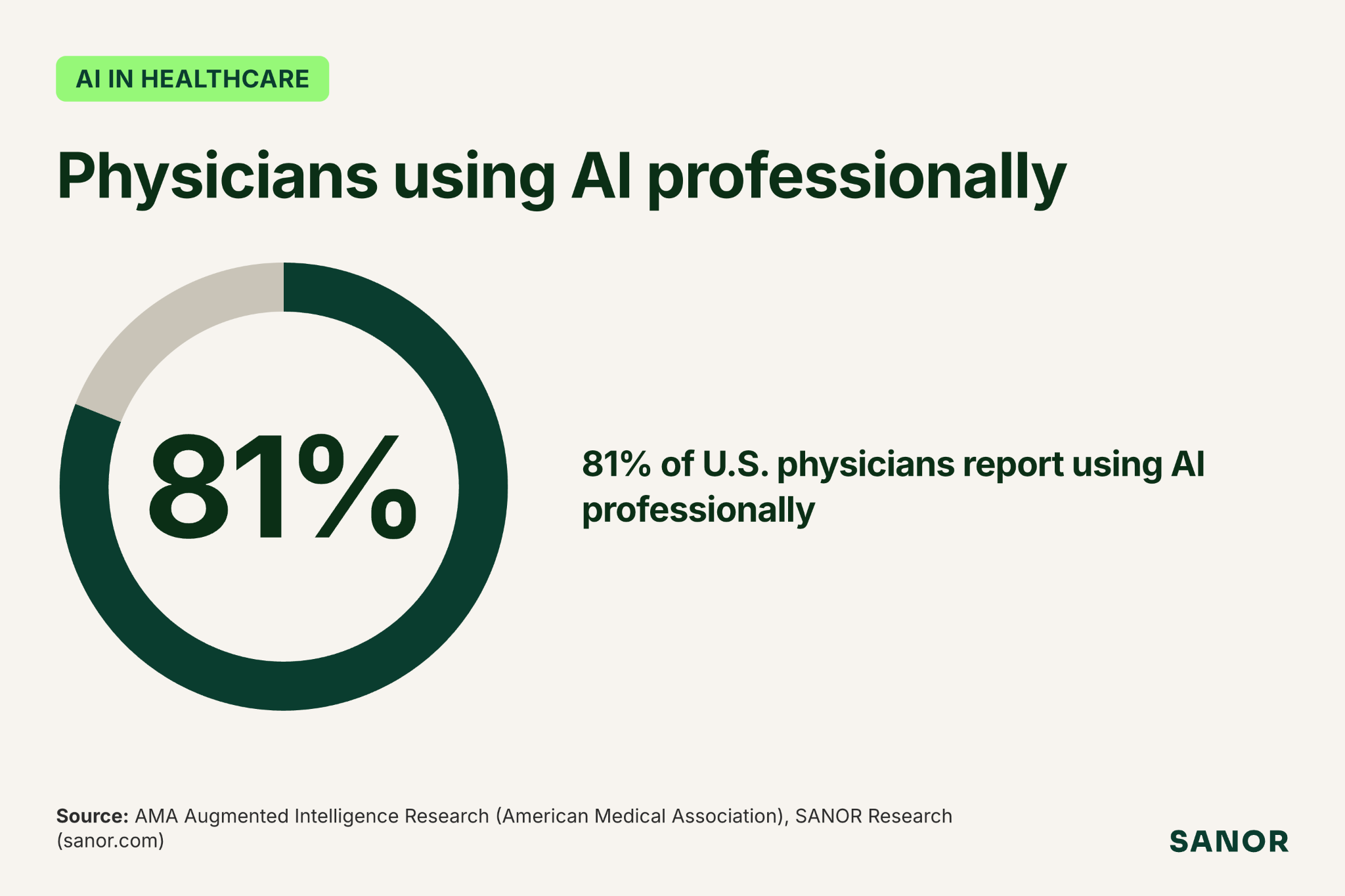
The figure comes from the AMA’s 2026 physician AI survey, which included 1,692 U.S. physicians across different specialties, practice settings, regions, and career stages.
Use has increased substantially since the AMA first conducted the survey. In 2023, 38% of physicians reported using AI professionally, rising to 66% in 2024.
Other research has found somewhat lower adoption. Doximity surveyed 3,151 U.S. physicians across 15 specialties during two periods in 2025 and early 2026. In its most recent group, 63% said they were using AI in clinical practice, up from 47% earlier in 2025. Doximity
How Has Physician AI Use Changed?
Physician AI use has more than doubled since 2023 (AMA)
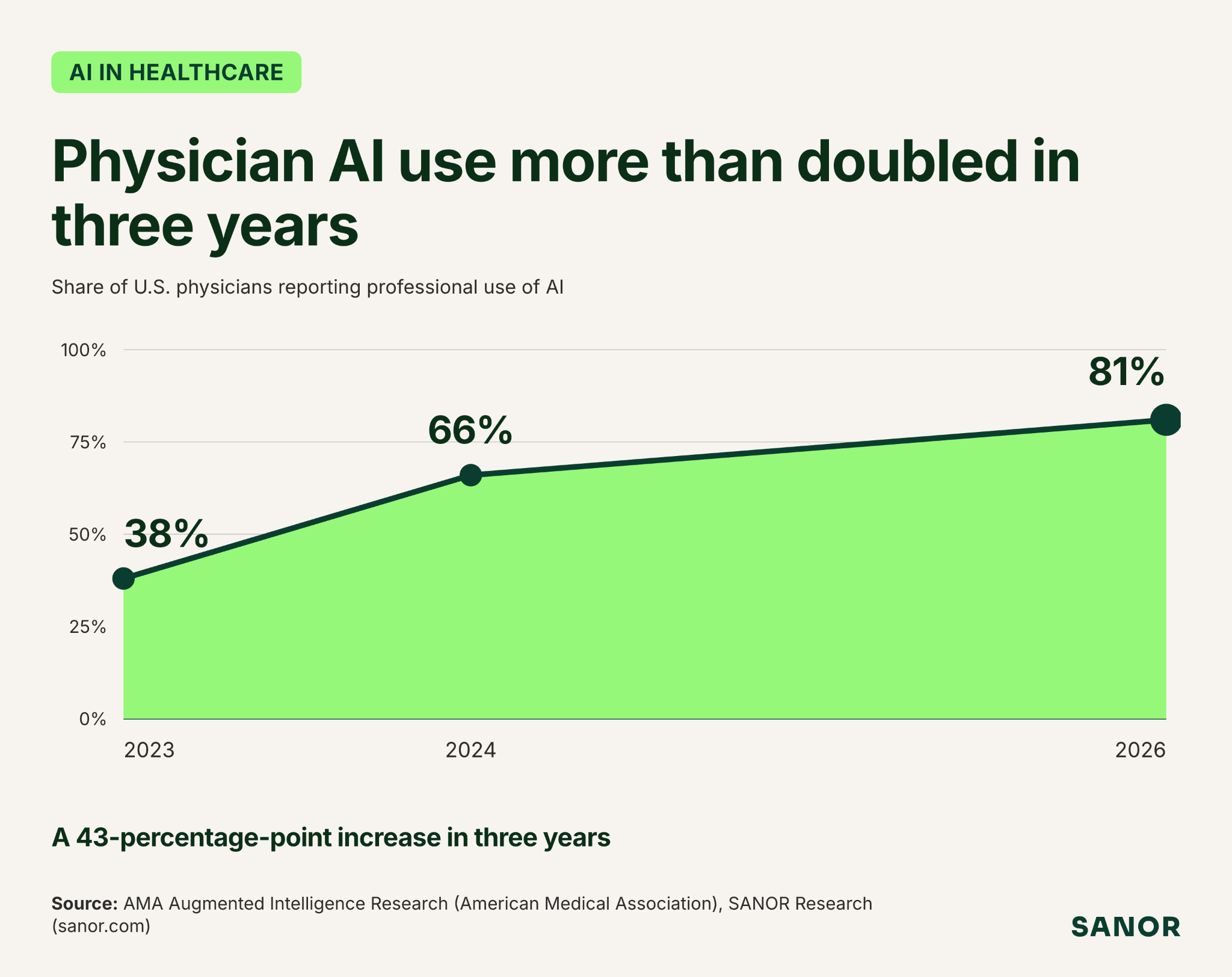
The AMA’s physician AI use measure increased from 38% in 2023 to 66% in 2024 and 81% in 2026.
Doctors are also using AI for more tasks. The average number of reported AI use cases increased from 1.1 per physician in 2023 to 2.3 in 2026.
Doximity found a similar increase. Its survey was conducted in two waves, first in March–April 2025 and again from November 2025 through January 2026. Current AI use increased from 47% to 63% between those groups.
Use is becoming more frequent as well. Among physicians who had adopted AI in Doximity’s latest survey group, 74% said they used it at least daily, compared with 64% in the earlier group. Doximity
Physicians are therefore not just adopting AI at higher rates; many are making it part of their regular work.
How Are Physicians Using AI?
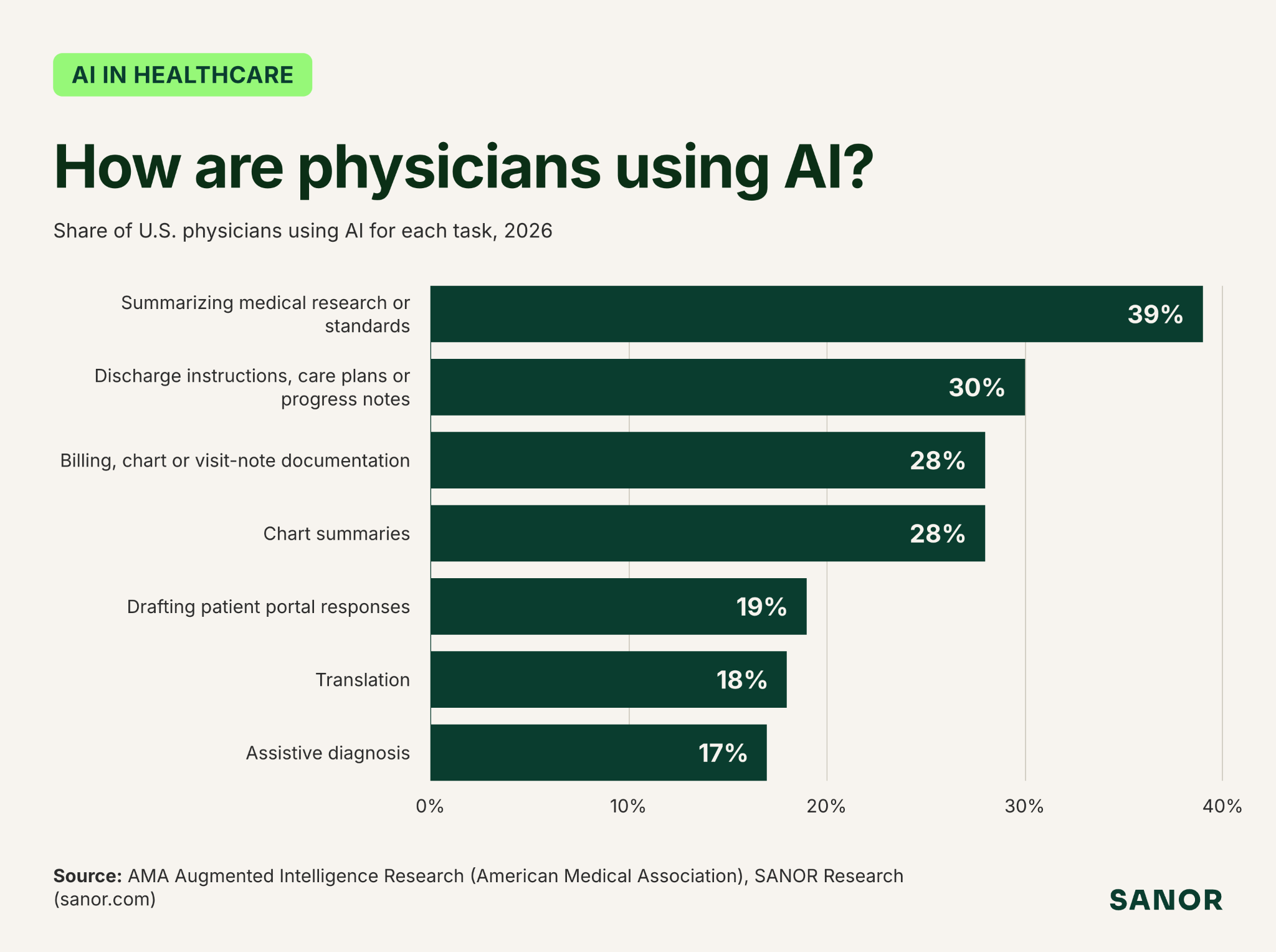
39% of physicians use AI to summarize medical research (AMA)
Research and standards-of-care summaries were the most common physician AI use in the AMA’s 2026 survey.
Documentation is another major area. 30% use AI for discharge instructions, care plans or progress notes, 28% for billing, chart or visit-note documentation, and 28% for chart summaries.
Other uses include drafting patient portal responses (19%), translation (18%), and assistive diagnosis (17%).
The largest increases have been in research and summarization. Use for medical research summaries rose from 13% in 2024 to 39% in 2026, while chart summaries increased from 12% to 28%.
Doximity found a similar pattern. In its most recent survey group, 35% of physicians used AI for literature search, while 29% used voice-based documentation tools, including ambient AI scribes. Doximity
Broader clinician research from KLAS also found documentation to be the most common AI workflow at 12 surveyed Epic organizations. Patient-history summaries and summaries of shifts or hospital stays were also widely used. KLAS
Overall, the most common uses are still practical: finding information, summarizing it, and reducing documentation work.
How Is AI Affecting Physician Work?
Ambient AI reduced documentation time by 1.6 minutes per note (Annals of Emergency Medicine)
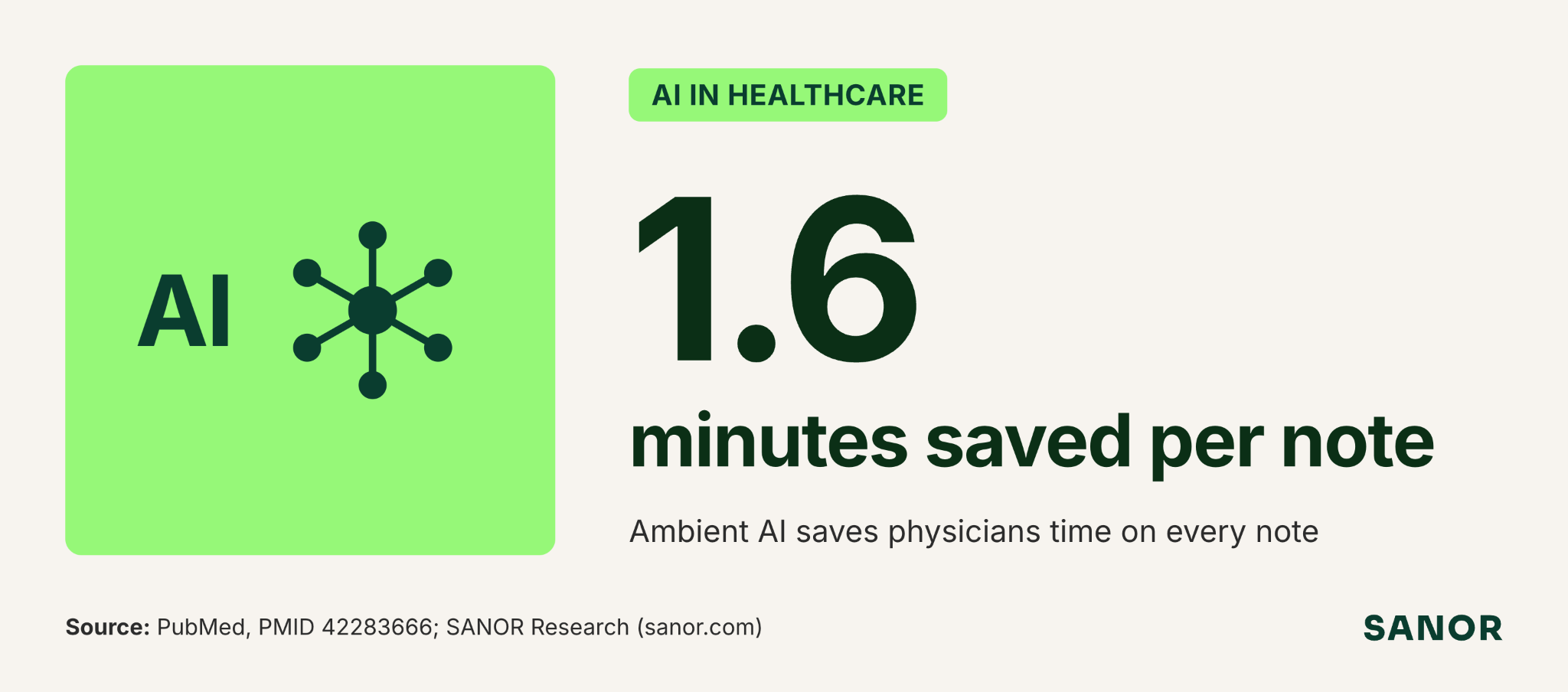
The 2026 study examined nearly 200,000 emergency department encounters across four hospitals and compared visits using ambient AI, human scribes, and no scribe.
Physicians using ambient AI spent an average of 1.6 fewer minutes documenting each note than physicians working without a scribe.
The study did not find an increase in clinical productivity, suggesting that the clearest benefit was time spent documenting rather than seeing more patients.
A separate 2026 study involving 100 emergency physicians and more than 10,000 encounters reached a similar conclusion. Ambient AI reduced on-shift documentation time by 28%, or about 73 seconds per encounter. JMIR AI
Researchers estimated that across 20 encounters, that would save about 24 minutes of documentation during an eight-hour shift.
A larger Providence study of 1,547 clinicians, including 1,073 physicians, also found lower note-writing time and a gradual reduction in after-hours documentation after ambient AI adoption. Daily appointment volume did not increase. JAMA Network Open
So far, the most consistent measurable benefit of AI for physicians is less time spent on documentation.
What Do Physicians Think About AI?
76% believe AI improves their ability to care for patients (AMA)
Physician confidence has increased alongside adoption. In 2023, 65% said AI provided an advantage in their ability to care for patients.
Efficiency is one of the biggest reasons for that optimism. 70% of physicians think AI could automate tasks that contribute to burnout.
Doximity found a similar focus on workload. Its survey asked physicians what excited them most about using AI in their practice.
Reduced administrative workload ranked first at 69%, followed by improved work-life balance (67%), increased job satisfaction (50%), more time with patients (43%), and improved patient care and outcomes (41%). Doximity
Still, physician opinion is mixed rather than universally positive. Around 40% of physicians say they are equally excited and concerned about AI.
The strongest enthusiasm appears to be around AI helping physicians spend less time on administrative work and more time on the parts of their job that require their attention.
What Are Physicians Concerned About?
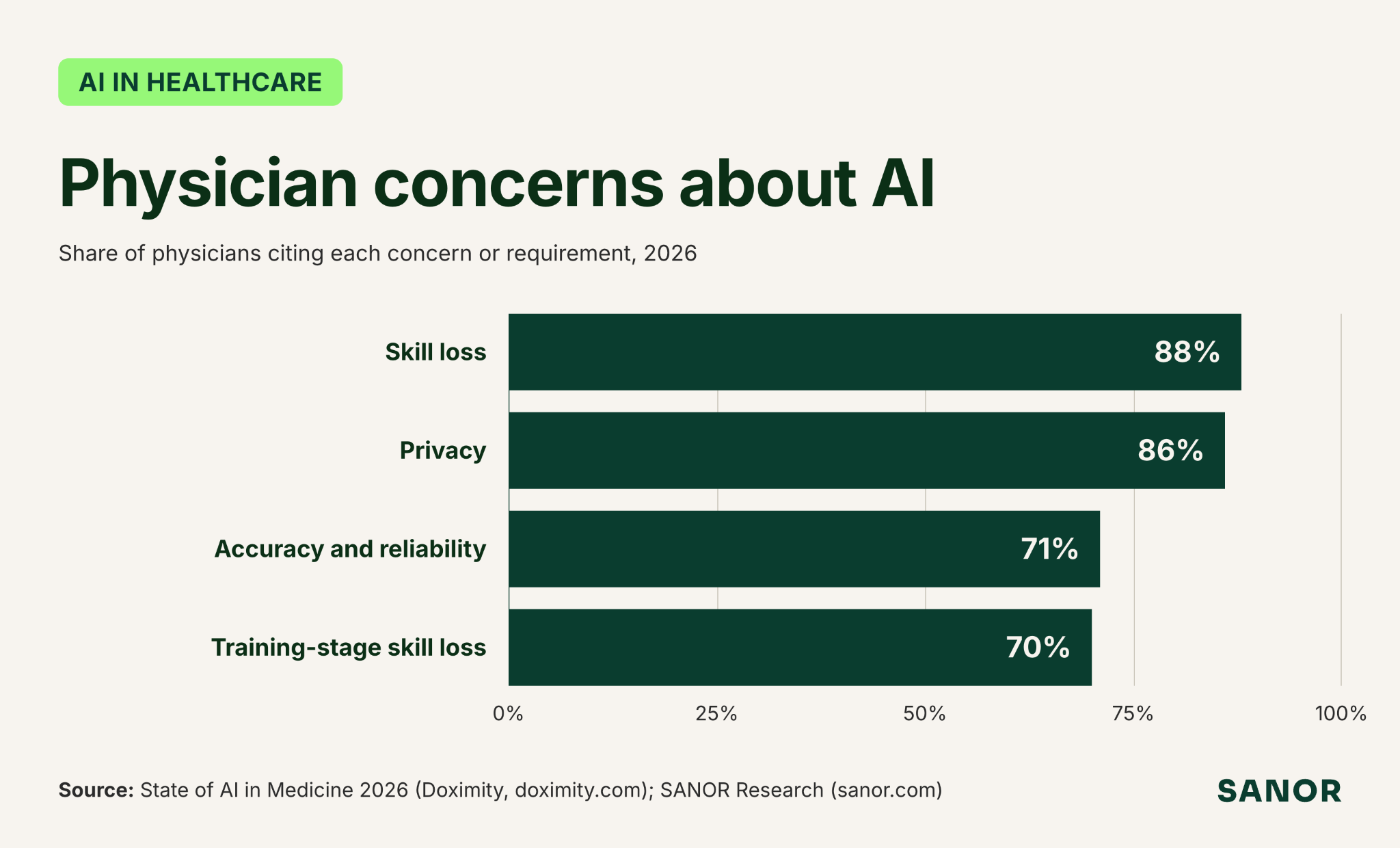
71% cite accuracy and reliability as an AI concern (Doximity)
Doximity found accuracy and reliability to be the most common concern among physicians.
The finding was consistent across every age group and all 15 specialties included in the survey.
Skill Loss
Overreliance is another concern.
88% of physicians surveyed by the AMA expressed at least some concern about AI-related skill loss. Concern was particularly high around physicians still in training, with 70% worried about skill loss among medical students and residents. AMA
Privacy
Patient information is another major issue.
86% of physicians say data privacy assurances are important when deciding whether AI should be adopted more widely.
Safety and Validation
Physicians also want AI systems to be tested and monitored.
88% say safety and efficacy validation from a trusted organization is important for AI adoption. Physicians also ranked clear liability frameworks among their highest priorities for building trust in the technology. AMA
Growing use has therefore not removed concerns around accuracy, privacy, responsibility, and becoming too dependent on AI.
Are Physicians Getting Enough AI Training?
92% of physicians want more AI education and training (AMA)
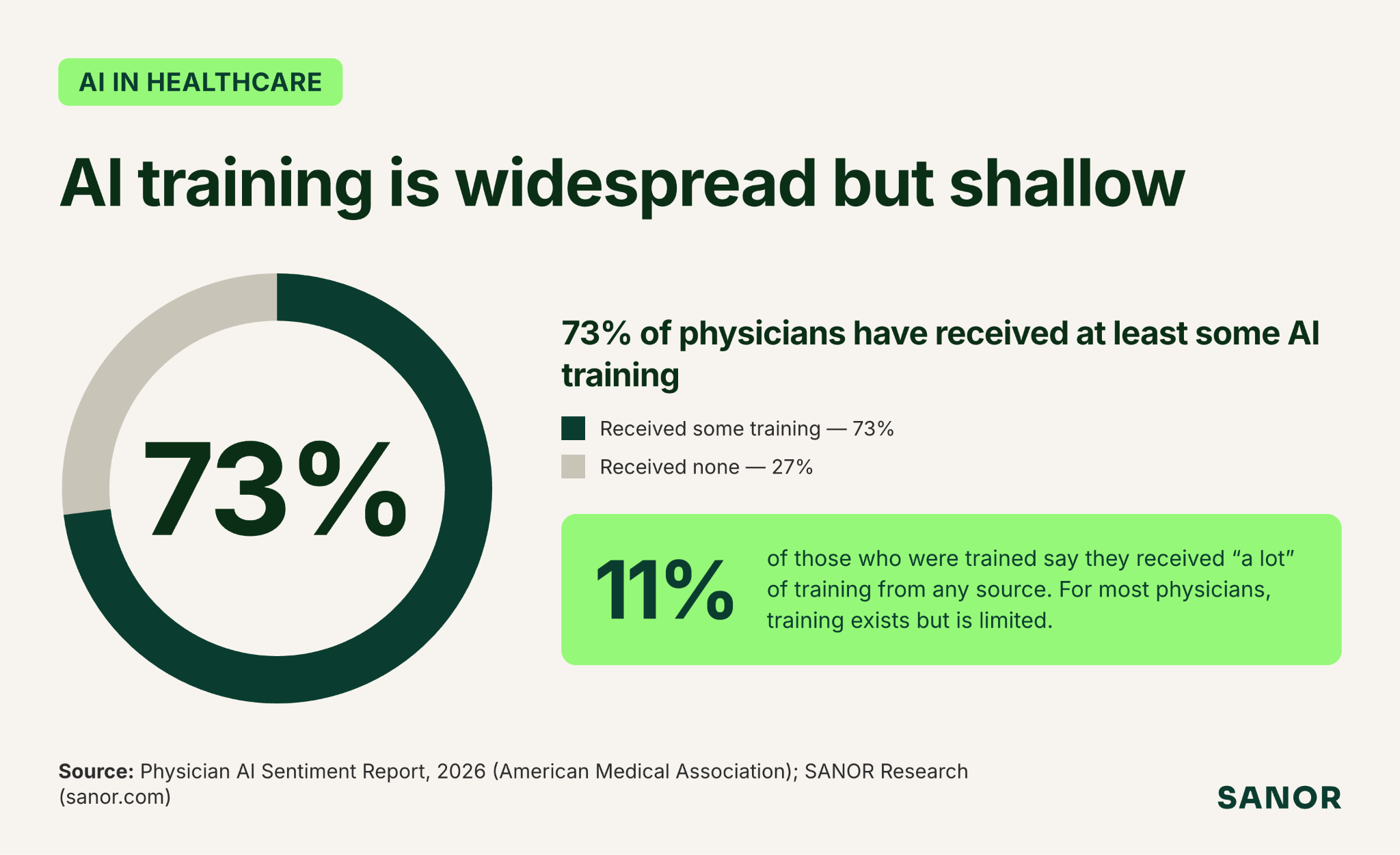
The AMA’s 2026 survey found that 73% of physicians had received at least some AI training, while 27% had received none.
But the amount of training is often limited. Among physicians who had received training, only 11% said they had received “a lot” from any source.
Training also varies depending on where physicians work.
Around 76% of physicians in hospital settings reported receiving some AI training, compared with 71% in group practices and just 55% in solo practices.
Physicians generally favor training that fits into their existing work. 49% prefer training built directly into the EHR, 46% prefer learning while working, and 40% favor online continuing education.
KLAS found an even larger readiness gap among broader clinician groups. Its 2026 research used surveys from 12 Epic healthcare organizations that had collected clinician AI data since January. Fewer than 25% of clinicians who had adopted AI said they had received adequate training on using AI-generated content in their workflows. KLAS
Physicians are increasingly getting access to AI, but training has not necessarily kept pace with adoption.
How Are Health Systems Supporting Physician AI Use?
62.6% of Epic hospitals had adopted ambient AI (American Journal of Managed Care)
A 2026 study looked at 6,561 U.S. hospitals, including 2,784 that used Epic electronic health records.
Among the Epic hospitals, 62.6% had adopted an ambient AI documentation tool by June 2025.
Adoption differed substantially between hospitals. 70.2% of nonprofit Epic hospitals had adopted ambient AI, compared with 28.8% of for-profit hospitals. Adoption was also higher in metropolitan hospitals (64.7%) than nonmetropolitan hospitals (54.3%).
This does not mean 62.6% of all U.S. hospitals use ambient AI. The figure applies specifically to hospitals using Epic, which represented about 42% of the hospitals included in the study.
AI adoption is also extending beyond documentation.
McKinsey surveyed U.S. healthcare leaders in late 2025 and found that 50% said their organizations had implemented generative AI, up from 25% in late 2023. Among care-delivery organizations, 54% had implemented generative AI for clinical productivity. McKinsey
Many organizations are still figuring out how to scale these tools. Deloitte found 49% of surveyed healthcare organizations were still experimenting with generative or agentic AI, while only around one-third were operating AI at scale. Deloitte
Physicians also want a say in how AI is introduced. 85% say they want to be consulted or directly involved in decisions about AI adoption in their practice.
Health systems are moving quickly on AI, but deployment alone is not enough. Physicians also need training, clear policies, and a role in deciding how the technology fits into their work.
Conclusion
AI is becoming a regular part of physician work.
Usage has more than doubled since 2023, and physicians are now applying AI across research, documentation, summarization, communication, and other everyday tasks.
The clearest measured gains so far are in documentation, where several studies have found that ambient AI can reduce the amount of time physicians spend writing notes.
But adoption is moving faster than some of the systems around it. Physicians continue to raise concerns about accuracy, privacy, skill loss, and responsibility, while most say they want more AI training.
As physician AI use continues to grow, the focus is shifting from whether doctors will use AI to how well it can be integrated into their everyday work.
Sanor publishes for general information. This publication is not medical, financial, or investment advice.
The Private Clinic Playbook
Grow revenue at each location and build a commercial model that can scale across a clinic group.
Sanor never sells your personal information. By providing this information you agree to Sanor’s Privacy Policy and Terms of Service.

SANOR research follows the principles of ISO 20252:2019 and the ICC/ESOMAR International Code on Market, Opinion and Social Research and Data Analytics, and is conducted in line with our Independence Policy. Our published reports follow our Editorial Standards.
SANOR research is funded through advisory engagements and research licensing. We do not accept vendor sponsorship, paid placement, or advertising.
All publications are provided for general information only. They do not constitute medical, financial, or investment advice and do not account for the circumstances of any specific business or individual.